
.webp)

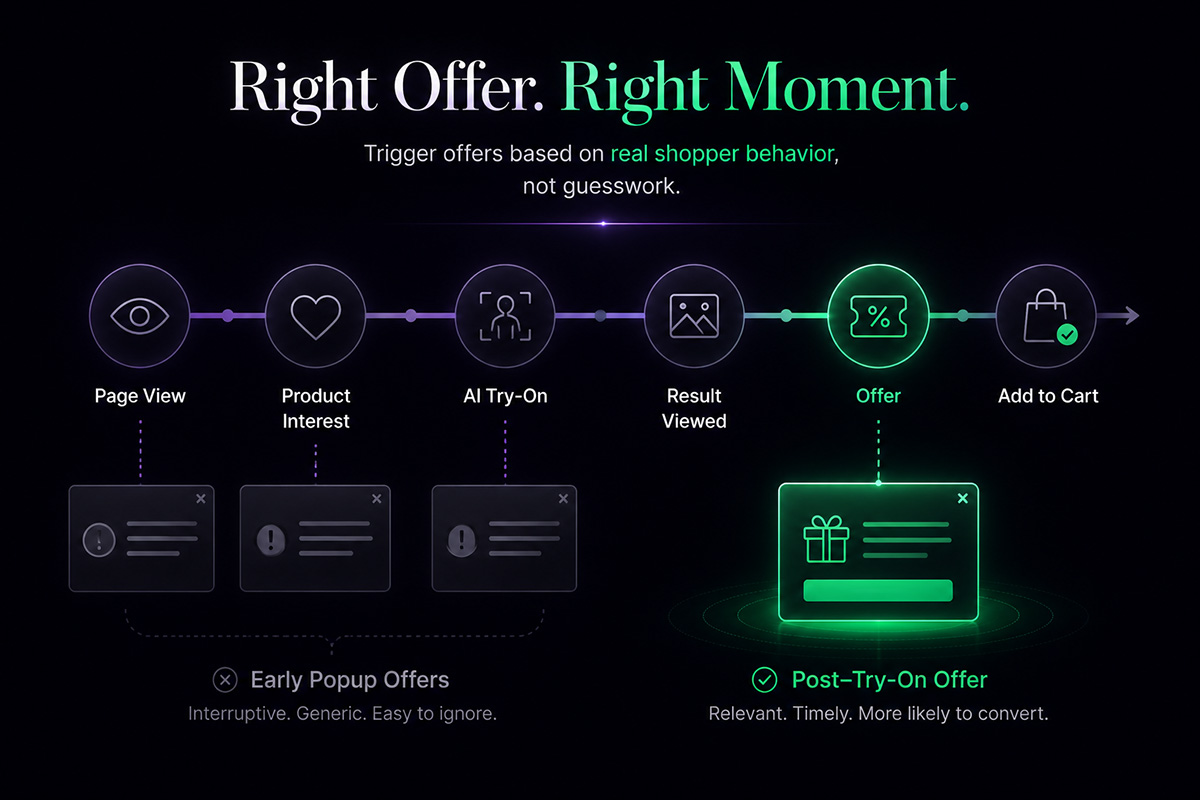
A discount shown too early feels like noise.
A discount shown after the right action can feel like a useful next step.
That is the difference behind post-try-on offers.
Most fashion stores use offers at the wrong time. A shopper lands on a product page, and before she has looked at the fabric, selected a color, checked the size, or decided whether the item fits her style, a popup asks for an email in exchange for 10% off.
The store is asking for action before the shopper has built intent.
Post-try-on offers work differently. They appear after a shopper has used AI virtual try-on and viewed the result. That means the shopper has already clicked, uploaded a photo, waited for the preview, and spent time with the product.
The offer is no longer interrupting a stranger. It is speaking to someone who has already raised her hand.
Why timing changes the offer
The same 10% discount can feel cheap or useful depending on when it appears.
Before product interest is clear, a discount can distract from the item. It may also train shoppers to wait for codes.
After try-on, the context changes.
The shopper has done something active. She has moved past casual browsing and into evaluation. At that point, the store does not need to shout. It only needs to give a clear next step.
That next step could be:
- Free shipping on this item
- A small first-order code
- A limited-time cart incentive
- A bundle suggestion
- A save-this-look prompt
- A return reassurance message
- A styling suggestion with a cart action
The best post-try-on offer is not always the biggest discount. It is the one that matches the shopper's moment.
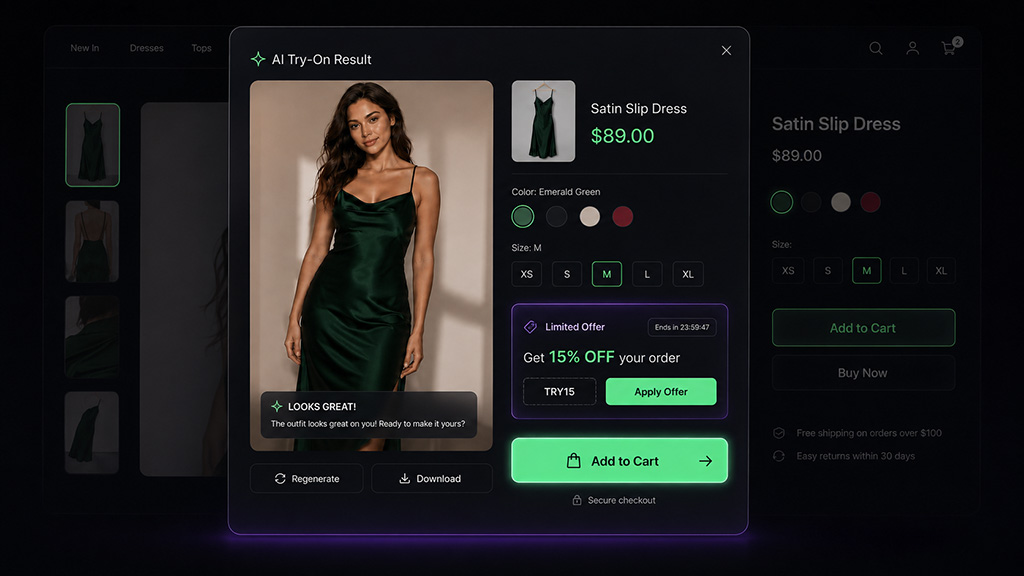
What makes a good post-try-on offer
A good post-try-on offer should feel connected to the action the shopper just took.
Generic popup language is weak:
Get 10% off your order!
Contextual language is stronger:
Your try-on result is ready. Add this item today and enjoy free shipping.
Or:
Like the look? Save it to your cart with a first-order offer.
The difference is small, but important. The second version acknowledges the shopper's behavior. It does not feel randomly dropped onto the page.
For fashion brands, this matters. You do not want the offer to make the product feel cheaper. You want it to make the next step feel easier.
Where ETRYON fits in
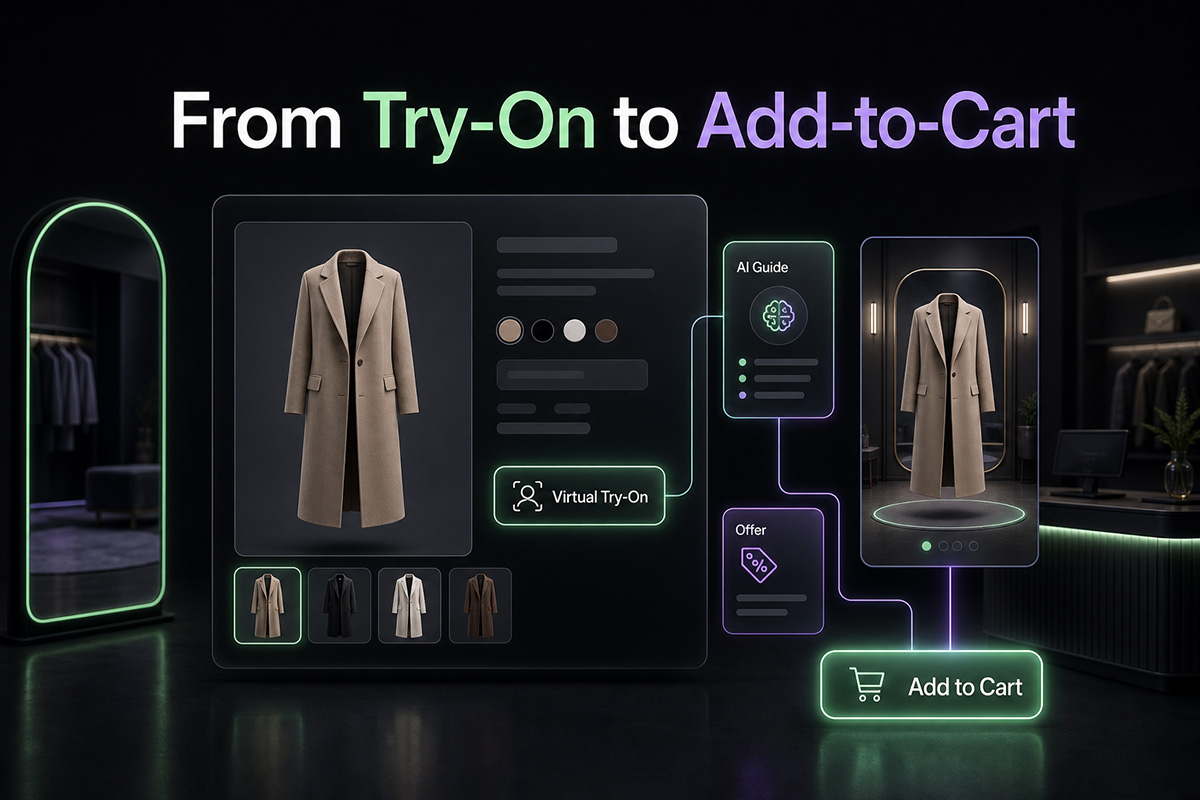
ETRYON supports post-try-on offers when configured, so Shopify and WooCommerce fashion stores can show an offer after the shopper has viewed the AI try-on result.
That timing is the point.
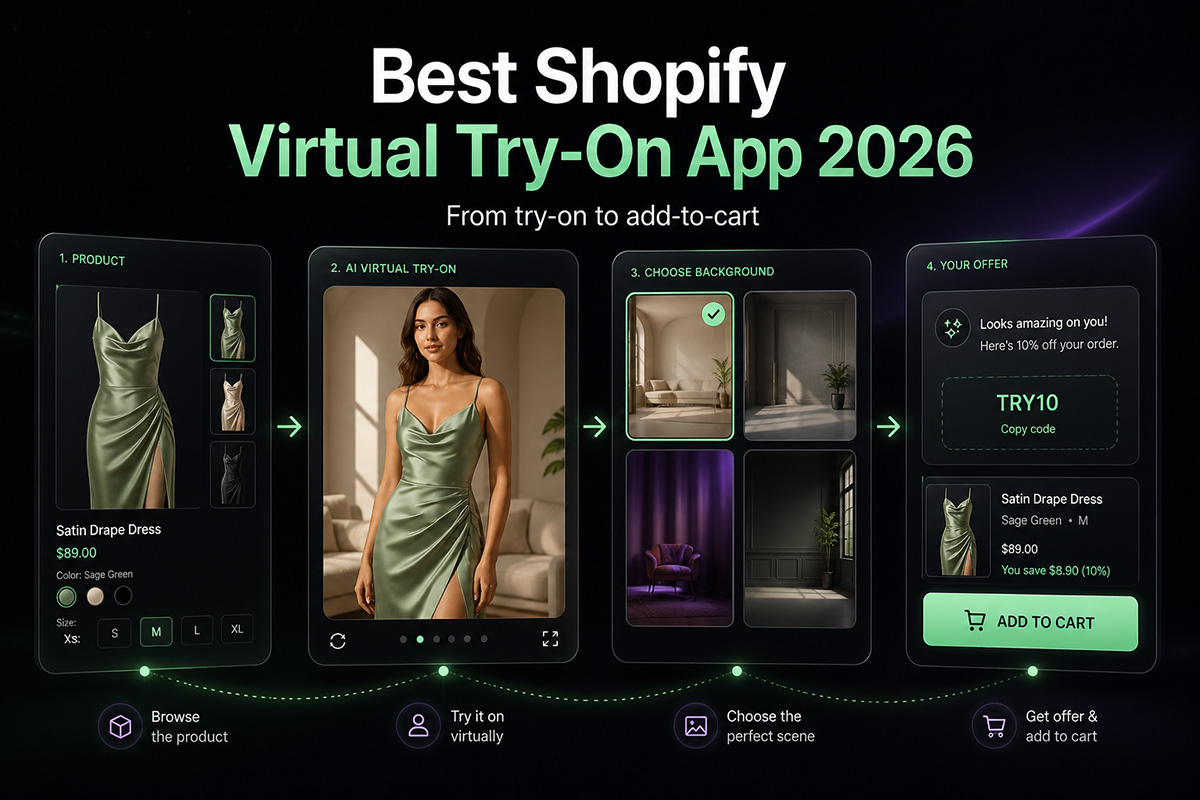
The shopper starts on the product page, uses virtual try-on, sees the result, and then receives a next-step prompt while the product is still fresh in mind.
This is different from a standard discount popup. The offer is based on behavior, not page arrival.
You can explore the setup on the ETRYON Apps page and test the shopper flow in the ETRYON live demo.
Use offers carefully
Post-try-on offers should not appear everywhere.
Start with products where shoppers usually need a little more time before buying:
- Dresses
- Jackets
- Higher-priced items
- Products with several color or style options
- Items with strong traffic but weaker add-to-cart rate
Then keep the offer simple.
Do not make it louder than the product. Do not show it before the try-on result. Do not repeat it so often that it feels like a pop-up campaign. And do not use a discount so large that it hurts your margin or brand position.
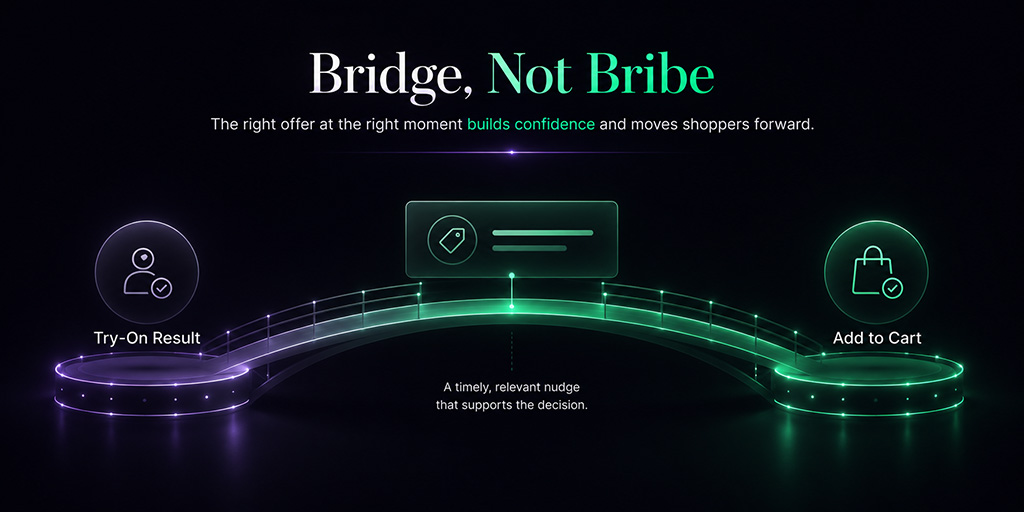
A post-try-on offer should feel like a bridge, not a bribe.
What to measure
Do not judge post-try-on offers by views alone.
Track what happens after the offer appears:
- Offer clicks
- Offer dismissals
- Post-try-on add-to-cart actions
- Cart visits after try-on
- Orders after try-on
- Average order value on products with offers
- Add-to-cart rate before and after enabling the offer
The question is simple:
Did the offer help an engaged shopper take the next step?
ETRYON tracks try-on interactions and post-try-on add-to-cart behavior, giving merchants a clearer view of what happens after shoppers use virtual try-on.
You can read more in How ETRYON Virtual Try-On Helps Increase Add-to-Cart Rates for Fashion Stores.
A simple framework
Use this five-step approach:
- Choose products where buying hesitation is common.
- Wait until the try-on result is viewed.
- Show one clear offer or next step.
- Keep the message tied to the try-on moment.
- Measure add-to-cart behavior after the offer.
That is enough to start.
Final thought
A post-try-on offer works because it waits.
It does not interrupt the shopper before she cares. It appears after she has spent effort on the product.
That makes the message feel less like a popup and more like a useful next move.
For fashion stores, that timing can make the difference between someone who browses and someone who buys.


.avif)

