
.webp)

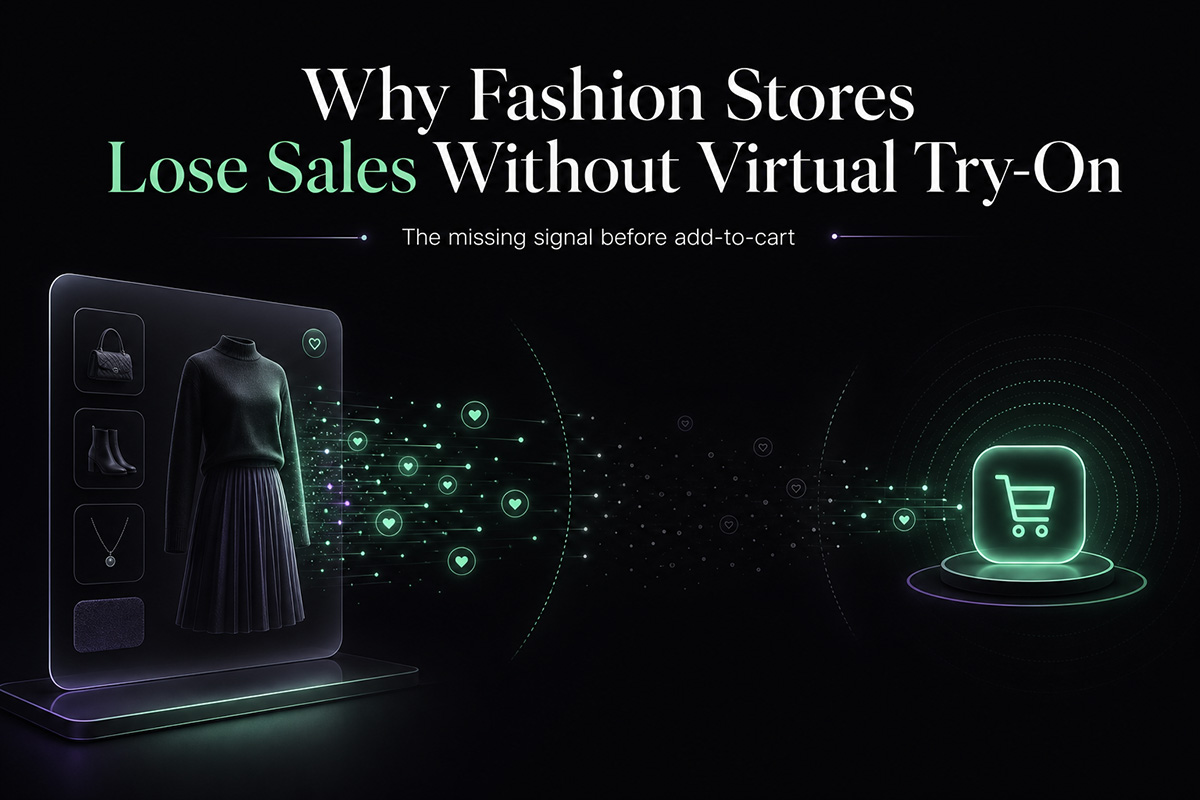
Most fashion stores do not lose sales only at checkout.
They lose them earlier, in a quieter place: the product page.
A shopper opens a dress, top, jacket, or swimwear page. She looks at the images. She checks the price. She may tap a color, read a few details, scroll through reviews, and then leave.
No abandoned cart.
No failed payment.
No customer support ticket.
No visible objection.
From the merchant's dashboard, it looks like a normal page view.
But commercially, something happened there. A shopper showed interest, spent attention, and left before taking a measurable buying action.
That is the part virtual try-on can change.
Not because AI virtual try-on magically makes every shopper buy. It does not.
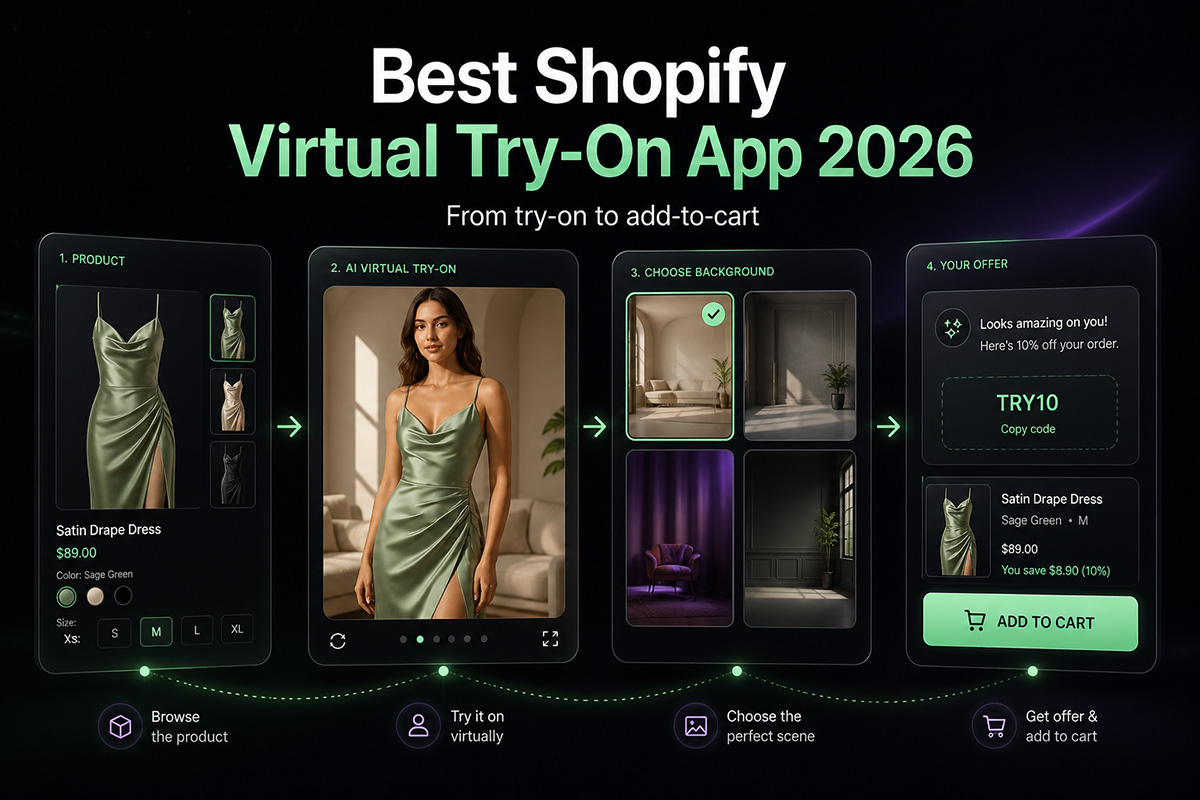
Its real value is more practical: it creates a product-page action between “viewed product” and “added to cart.”
For fashion stores, that middle action matters.
Product Pages Have a Missing Signal
Most ecommerce analytics are good at measuring the ends of the journey.
You can see sessions.
You can see product views.
You can see add-to-cart events.
You can see purchases.
You can see returns.
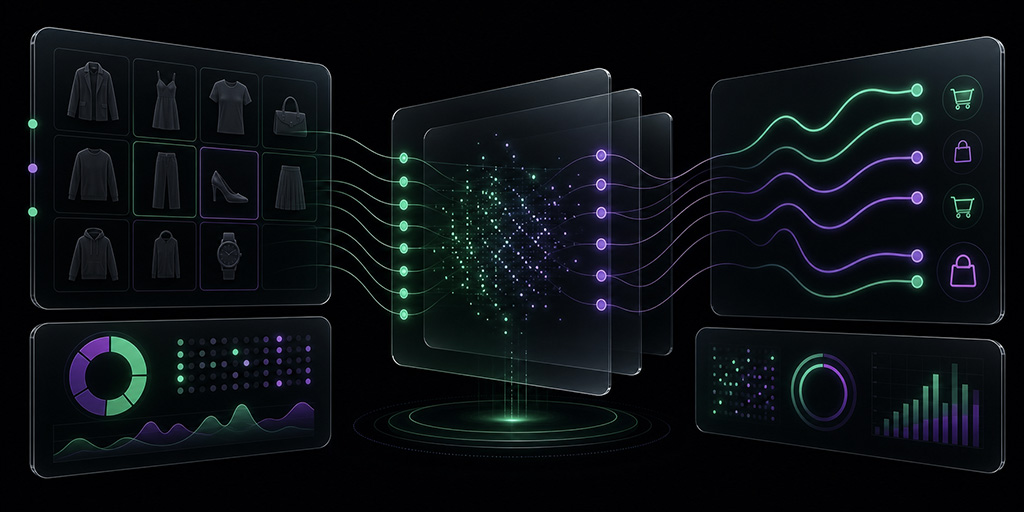
But the space between product view and add-to-cart is often vague.
That space is especially important in fashion, because the buying decision is not purely functional. Shoppers are not only checking specs. They are deciding whether a product belongs in their life, their wardrobe, their taste, and their next occasion.
Traditional product pages try to support that decision with images, descriptions, size guides, reviews, and return policies.
Those elements matter.
But they still leave merchants with a data problem: you often cannot tell which shoppers were close to acting, and which shoppers were only browsing.
Virtual try-on creates a stronger signal.
A try-on click is not the same as a page view.
An upload is not the same as a scroll.
A completed try-on is not the same as passive browsing.
A post-try-on add-to-cart is a much richer signal than a generic product impression.
This is why fashion stores lose sales without virtual try-on: they lose the chance to capture and respond to mid-funnel intent.
The Cost Shows Up in Returns Too
The same problem also appears after purchase.
According to the National Retail Federation, an estimated 19.3% of online sales will be returned in 2025, and 82% of shoppers say free returns are an important consideration when buying online.
Source: NRF 2025 Retail Returns Landscape
Fashion is under even more pressure. Coresight Research estimated that the average return rate for online apparel orders was 24.4% for the 12 months ended March 6, 2023.
Source: Coresight Research apparel returns report
Returns are not only a logistics issue. They are often the delayed cost of a weak pre-purchase decision.
If shoppers do not have enough product context before buying, some will leave before cart. Others will buy, receive the item, and send it back.
Both outcomes hurt.
One is invisible revenue leakage.
The other is visible operational cost.
Virtual try-on helps fashion stores address the earlier point in the journey, before the decision becomes either a lost visit or a return request.
More Product Information Is Not Always the Answer
A natural response is to add more content to the product page.
More photos.
More text.
More reviews.
More fit notes.
More shipping and return reassurance.
Sometimes that helps. Sometimes it just makes the page heavier.
Baymard's product page UX benchmark found that 52% of desktop ecommerce sites and 62% of mobile ecommerce sites have “mediocre or worse” product page UX performance.
Source: Baymard Product Page UX Benchmark
That should make fashion merchants cautious.
The answer is not always to keep adding static information. The better question is: what action helps the shopper move forward?
Virtual try-on is useful because it is not just another block of content.
It asks the shopper to do something.
That action creates engagement, creates intent data, and creates a natural moment for the next step.
What ETRYON Adds to the Product Page
ETRYON is designed around this product-page middle layer.
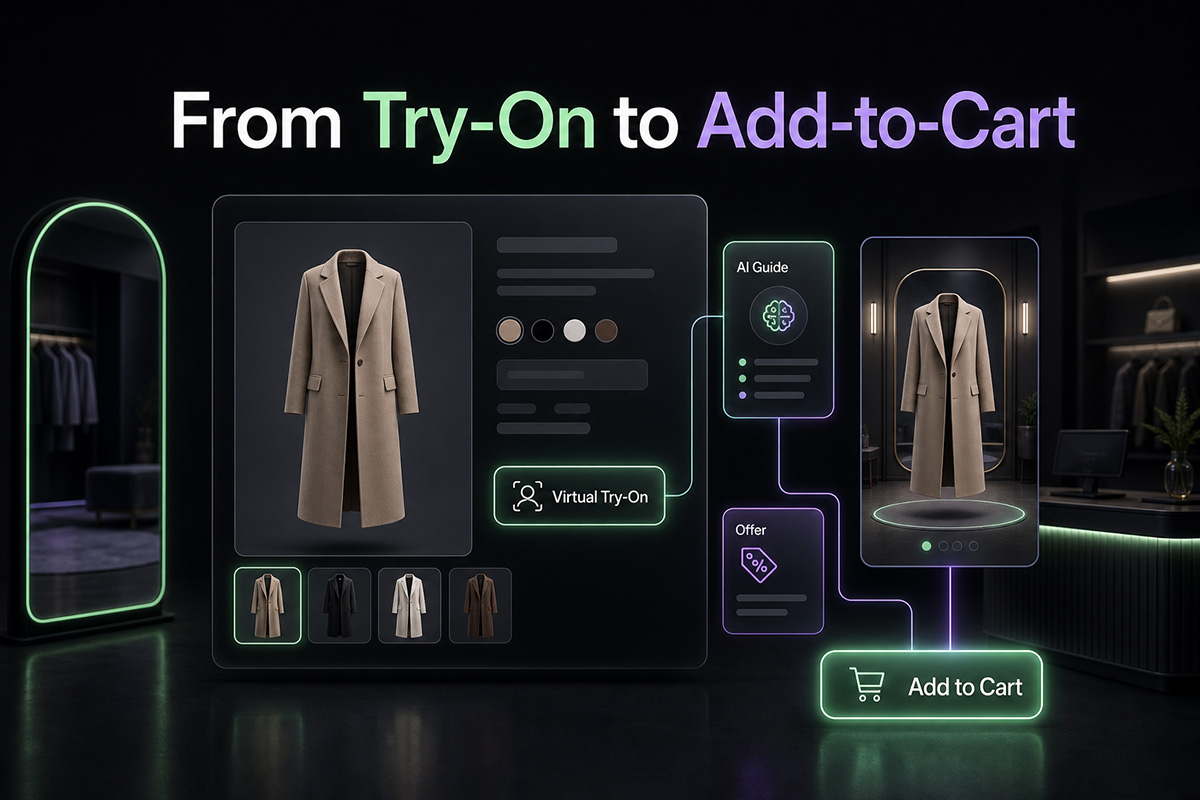
Instead of treating AI virtual try-on as a separate visual demo, ETRYON connects try-on with the actions that matter after the result appears.
For Shopify and WooCommerce fashion stores, that means the try-on experience can sit closer to:
- Product context
- Selected item or variant context when available
- Post-try-on offers
- Add-to-cart actions
- Storefront analytics
This is important because the try-on result itself is not the business outcome.
The business question is what the shopper does after seeing it.
Does she continue browsing?
Does she choose another option?
Does she respond to an offer?
Does she add the item to cart?
Does she leave?
ETRYON helps merchants bring those actions into a more connected flow.
Read more about this idea here: What Happens After Virtual Try-On.
Virtual Try-On Turns Interest Into an Operable Funnel
A normal product view is broad. It tells you someone arrived.
A try-on action is narrower. It tells you someone cared enough to interact with a specific product.
That difference is valuable.

With ETRYON, merchants can track storefront events such as:
- Try-on button impressions
- Try-on clicks
- Modal opens
- Uploads completed
- Generation starts
- Generation successes
- Generation failures
- Post-try-on add-to-cart actions
- Cart views after try-on
This gives fashion stores a better way to evaluate product-page demand.
For example:
- If a product gets many try-on clicks but few completed uploads, the try-on entry point may need clearer copy.
- If a product gets many successful try-ons but few cart actions, the offer, price, variant setup, or product promise may need review.
- If one collection gets strong post-try-on cart actions, it may deserve more traffic, better merchandising, or expanded try-on coverage.
- If another category gets weak try-on engagement, it may not be the right place to prioritize the feature.
This is the practical value.
Virtual try-on is not only a shopper-facing feature. It can become a merchant-facing diagnostic layer.
Why This Matters for Shopify and WooCommerce Stores
Smaller fashion stores often cannot afford to waste traffic.
Paid traffic is expensive. Organic traffic is slow to build. Social traffic can be inconsistent. Even when a product page gets visitors, the merchant still needs to understand which products deserve more attention.
ETRYON helps by making product-page intent more visible.
For Shopify stores, ETRYON can be installed through the Shopify App Store and added through the Shopify theme workflow. Shopify merchants do not need an API key from app.etryon.ai.
For WooCommerce stores, ETRYON works through a WordPress plugin and connects using an API key from app.etryon.ai.
You can explore the app options here: ETRYON Apps.
You can also view the live demo here: ETRYON Live Demo.
The Real Loss Is Not Always the Lost Order
When fashion stores think about lost sales, they often focus on orders that did not happen.
But the deeper loss is the missing knowledge.
Which products made shoppers curious?
Which collections created stronger product-page interaction?
Which try-on results led to cart actions?
Which items attracted attention but failed to move forward?
Without virtual try-on, much of that intent stays invisible.
With ETRYON, the product page can become more than a display page. It can become a place where shoppers interact, merchants learn, and the path from interest to cart becomes easier to measure.
That is why fashion stores lose sales without virtual try-on.
Not because every store needs another AI feature.
Because many stores are still letting high-intent product-page moments disappear without a trace.


.avif)

