
.webp)

Most fashion stores do not have a traffic problem first.
They have a decision problem.
The shopper lands on the product page. She likes the dress, jacket, or top enough to stay. She scrolls. She checks the color. She hesitates over size. She zooms into the fabric. She wonders whether it will look different on her than it does on the model.
Then she leaves.
That moment is where fashion product page CRO actually begins.
Not at the ad. Not at the homepage. Not at the checkout.
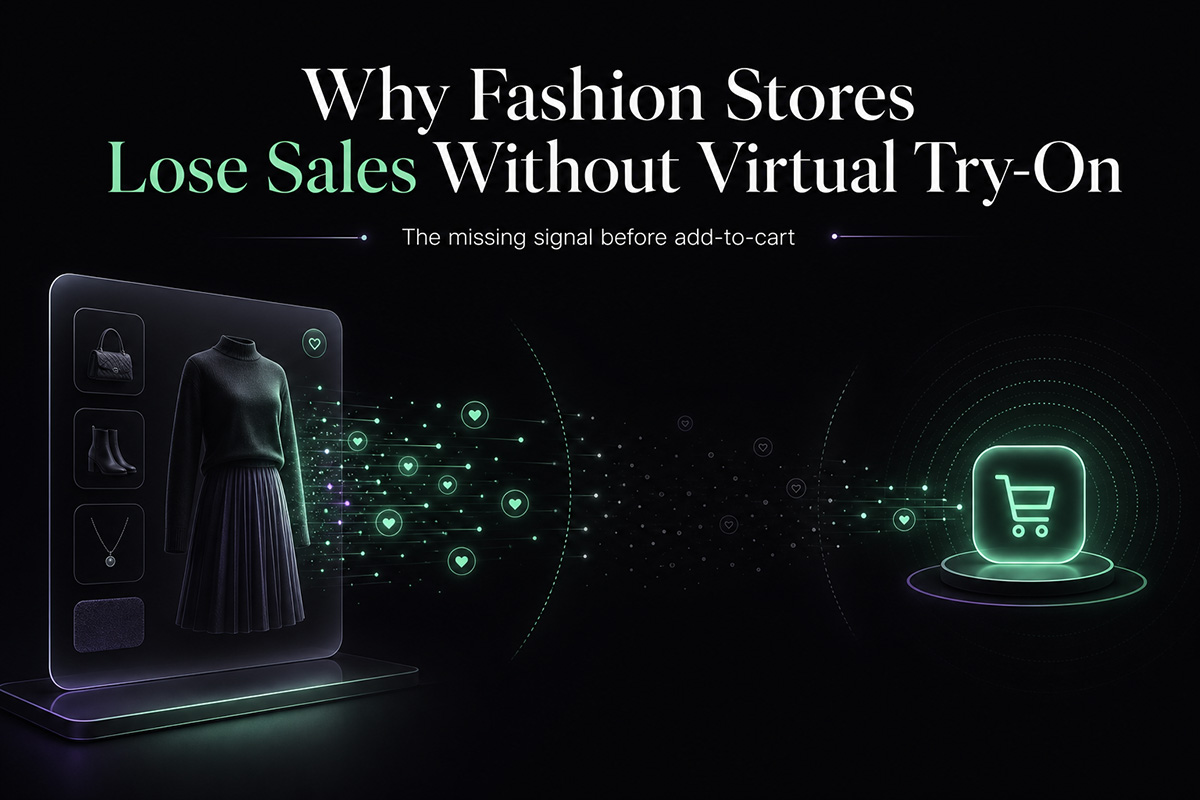
At the quiet second before add-to-cart.
Recent ecommerce benchmarks make the problem hard to ignore:
- Dynamic Yield reports a global ecommerce conversion rate of 2.74%, with Fashion, Accessories, and Apparel around 2.81%.
- Dynamic Yield also reports the global average add-to-cart rate at 6.07%.
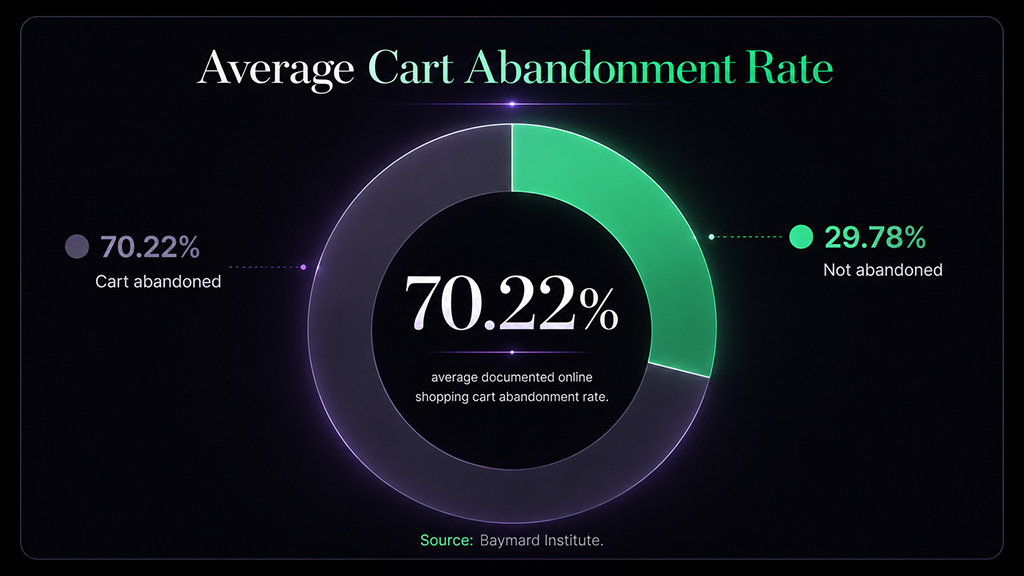
- Baymard's cart abandonment research reports an average documented cart abandonment rate of 70.22%.
- Baymard's product page UX benchmark found that only 48% of desktop ecommerce product pages and 38% of mobile product pages reached a decent or good UX performance level.
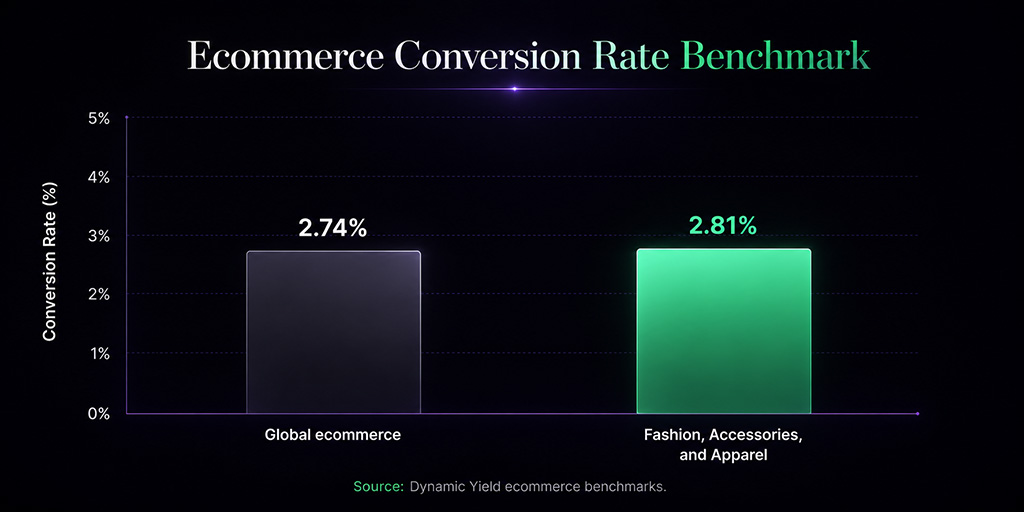
The numbers say something uncomfortable: getting someone to the product page is not the same as getting them to act.
Fashion product page CRO is the work of turning interest into enough confidence to click Add to Cart.
Here is how to do that without buying more traffic.
Stop treating the product page like a catalog
A catalog shows the product.
A strong fashion product page sells the decision.
That difference matters.
Many fashion product pages are built as if the shopper simply needs more information: more images, more copy, more details, more icons, more badges. But shoppers do not abandon product pages only because information is missing.
They abandon because the information does not resolve the right uncertainty.
For fashion products, the real questions are rarely technical:
- Will this look good on me?
- Will the color feel the same in real life?
- Is this too fitted, too loose, too short, too formal?
- Can I see myself wearing it?
- Is this worth the risk of ordering?
The product page needs to answer those questions in the order the shopper feels them.
That is CRO.
Build a confidence stack, not a longer page
A product page should not just be longer. It should be more decisive.
Think of the page as a confidence stack. Every element should remove one layer of doubt before the shopper reaches add-to-cart.
A useful confidence stack for fashion stores usually includes:
- Clear product images
- Variant-specific visuals
- Fit and fabric explanation
- Size selection that is easy to scan
- Return reassurance near the buying area
- Customer proof or fit feedback
- A way to visualize the product in a personal context
- A clear add-to-cart path
If one layer is weak, the shopper has to guess.
And guessing is expensive.
For fashion stores, that friction is often visual.
Fix the visual gap before rewriting everything
Fashion shoppers do not only ask, "Is this a good product?"
They ask, "Is this a good product for me?"
That is the visual gap.
A model photo helps, but it is still someone else's body, pose, lighting, and styling. A size chart helps, but it answers measurement, not self-image. Reviews help, but they rarely show the exact shopper's concern.
This is why fashion CRO cannot rely only on copy changes.
If a shopper cannot picture the product on herself, the page is still asking her to take a leap.
AI virtual try-on can help reduce that leap.
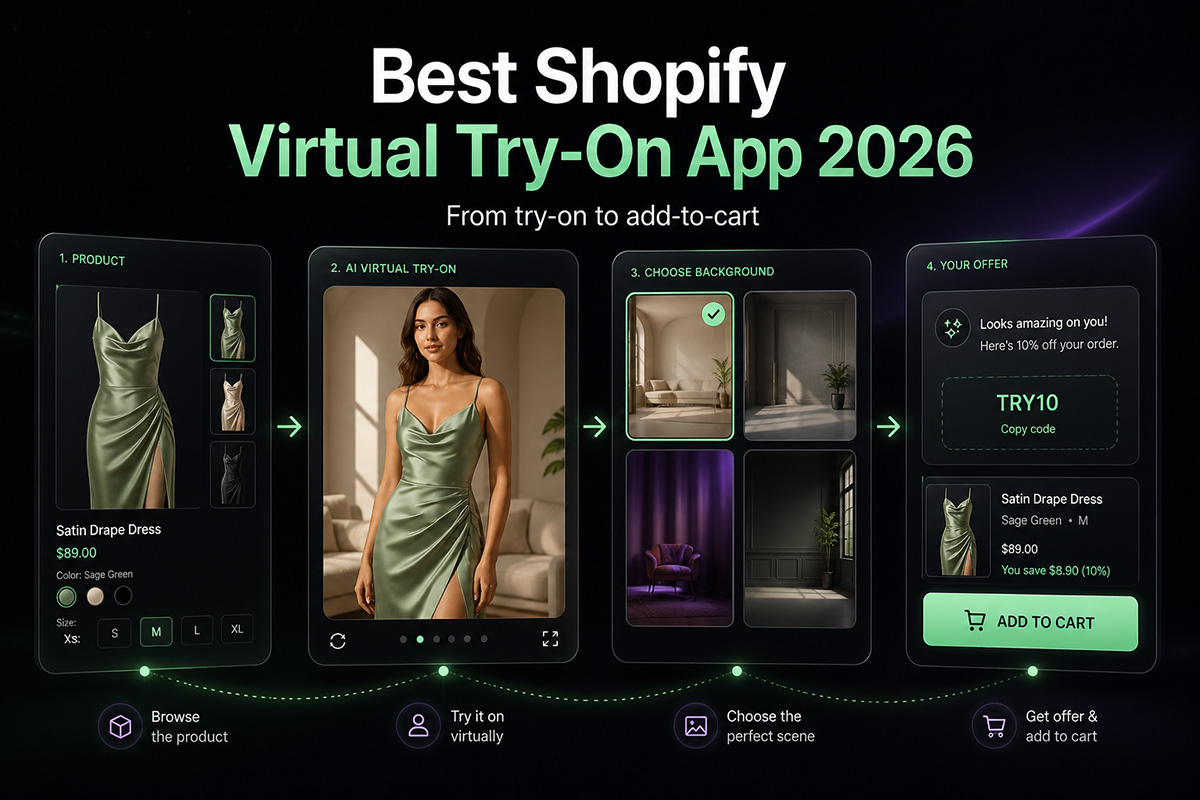
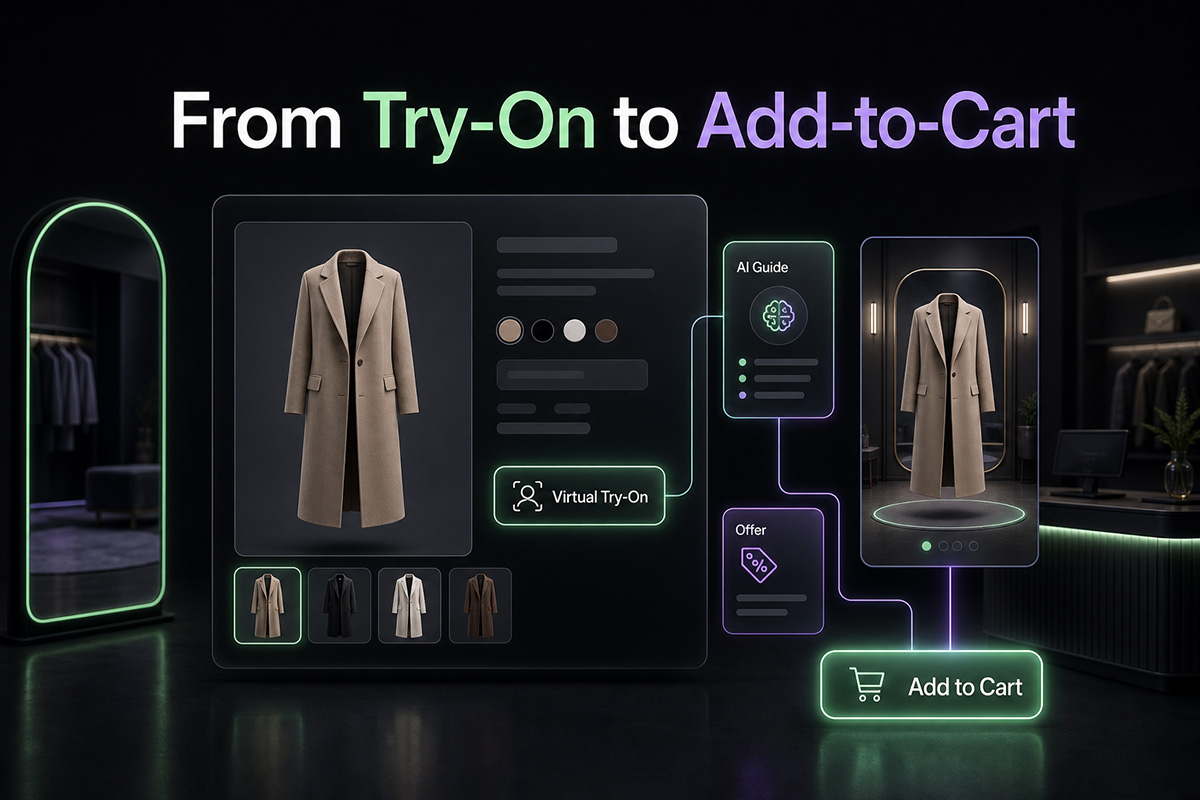
With ETRYON, Shopify and WooCommerce fashion stores can add AI virtual try-on directly to product pages. Shoppers upload a photo, preview a clothing product on themselves, and continue from the try-on result toward add-to-cart.
The goal is not to make a novelty feature.
The goal is to remove one of the biggest sources of hesitation before add-to-cart: personal visual uncertainty.
You can explore the platform options on the ETRYON Apps page or see the shopper experience in the ETRYON live demo.
Make variants impossible to misunderstand
Variants are where many fashion product pages quietly lose money.
A shopper chooses a color, but the image does not update clearly. A size is unavailable, but hidden in a dropdown. A product has multiple styles, but the selected option is hard to confirm.
Small issue. Big friction.
Baymard has repeatedly pointed out that ecommerce product page UX still leaves avoidable friction on both desktop and mobile. For apparel, this matters because size and color are not small configuration details. They are part of the buying decision.
A better fashion product page should make variant choice feel obvious:
- Show size options as buttons when possible
- Make unavailable sizes visible, not hidden
- Update images when color or style changes
- Keep the selected option visually clear
- Avoid resetting choices unexpectedly
- Make the add-to-cart button reflect the selected item
If you use virtual try-on, make sure the experience stays connected to the selected product or variant image when available.
This is one reason ETRYON is built around product-page context instead of a separate demo flow. The try-on experience should reflect what the shopper is actually considering, not a generic version of the item. For a deeper breakdown, read Why Choose ETRYON for AI Virtual Try-On.
Move reassurance closer to risk
Most stores have return policies. Many have shipping notes. Some have fit guidance.
But the question is not whether those details exist.
The question is whether they appear when doubt appears.
A return policy in the footer does not help much when the shopper is staring at the Add to Cart button. A size guide hidden in a tab does not help if the shopper is already unsure. A review section far below the product images may not rescue a decision that has already stalled.
For better product page CRO, place reassurance near the buying area.
Good examples include:
- "Free returns within 30 days" near Add to Cart
- Fit notes close to size selection
- Fabric details near product images
- Delivery estimate near the purchase button
- Review summary near the product title or price
- Care information near product details
Do not flood the page with trust badges.
Place the right reassurance next to the right risk.
Do not discount too early
Discounts can increase action, but they can also teach shoppers to wait.
A blanket popup five seconds after page load may capture some buyers, but it also interrupts people who were still evaluating the product. For fashion stores, the better opportunity is often after intent is visible.
For example:
- The shopper selects a variant.
- The shopper opens size guidance.
- The shopper uses virtual try-on.
- The shopper views the try-on result.
Now the store knows more than it did at page load. This person is not just browsing. She is evaluating.
That is a better time for a carefully placed offer.
ETRYON supports post-try-on offers when configured, allowing merchants to show a timely next step after the shopper has already engaged with the product.
The offer should not be the main reason to buy.
It should be the final nudge after uncertainty has already been reduced.
Measure hesitation, not only sales
Most product page CRO fails because stores only measure the end.
Sales matter, obviously. But if you only look at purchases, you miss the earlier signs of friction.
Track the steps before add-to-cart:
- Product page views
- Variant selections
- Size guide clicks
- Try-on button clicks
- Upload completion
- Generation success
- Post-try-on add-to-cart
- Cart visits
- Checkout starts
- Purchase completion
This tells you where confidence breaks.
If shoppers view products but do not select variants, the product may not be clear enough.
If they select variants but do not add to cart, risk may still feel too high.
If they open try-on but do not complete upload, the interaction needs work.
If they complete try-on but do not add to cart, the result page needs a clearer next step.
ETRYON tracks key storefront events around try-on interactions and post-try-on add-to-cart behavior, helping merchants see more than image generation count. You can also read how ETRYON virtual try-on helps increase add-to-cart rates for fashion stores.
The real CRO question is not "Did the feature get used?" It is "Did the feature move shoppers closer to buying?"
Run CRO where the money is leaking
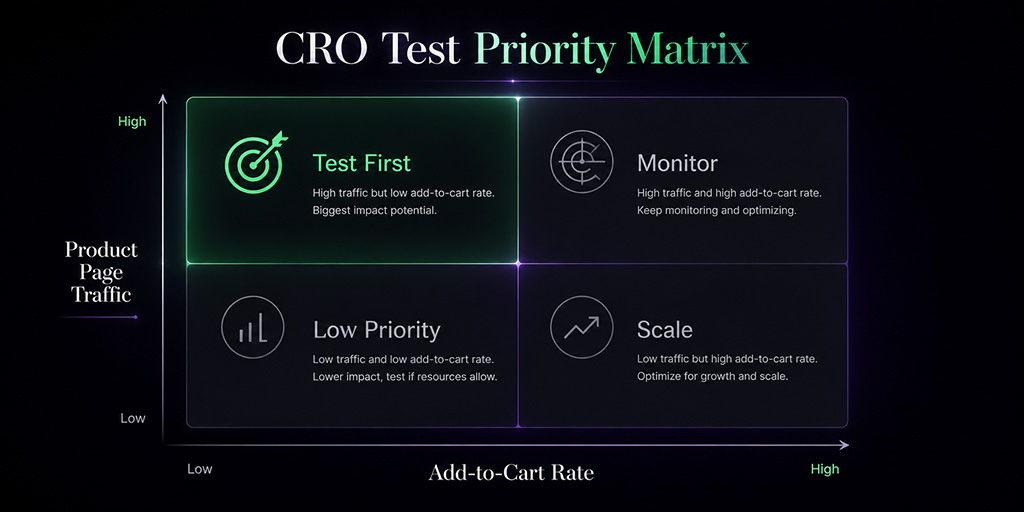
Do not start with every product.
Start where the leak is obvious.
Good candidates include:
- High-traffic products with low add-to-cart rate
- Products with many color or size variants
- Higher-priced products that require more confidence
- Products with strong views but weak cart actions
- Products with frequent sizing or styling questions
- Products with higher return risk
This keeps the test clean.
For example, a fashion store might choose its top 10 dress pages and improve only the decision stack: better variant images, clearer size selection, return reassurance near the button, AI virtual try-on, and post-try-on offer testing.
Then measure the add-to-cart rate before and after.
That is more useful than redesigning the whole site because "conversion feels low."
A sharper CRO checklist for fashion product pages
Before spending more on ads, ask these questions:
- Can shoppers understand the product in five seconds?
- Can they see the selected color or style clearly?
- Can they tell which sizes are available without extra work?
- Does the page help them imagine the product on themselves?
- Is return reassurance visible near the buying decision?
- Is the add-to-cart button close to the moment of confidence?
- Does mobile make the decision easier or harder?
- Are you tracking behavior before add-to-cart?
- Do you know where shoppers hesitate?
If the answer is no, more traffic will mostly create more unfinished decisions.
Final thought
Fashion product page CRO is not about making shoppers click harder.
It is about making the product easier to believe in.
The best product pages do not simply display clothing. They help shoppers resolve a personal question quickly: "Can I see this working for me?"
That is where images, variants, fit guidance, reassurance, AI virtual try-on, and post-try-on offers all connect.
ETRYON fits into that decision layer by helping Shopify and WooCommerce fashion stores bring virtual try-on into the product page and connect the result to the buying flow.
If you are evaluating tools for your store, you may also find these guides useful: Best Virtual Try-On App for Shopify Fashion Stores and Best AI Virtual Try-On Plugin for WooCommerce.
More traffic gives you more visitors.
A better product page gives more of those visitors a reason to act.


.avif)

